Tag: Vintage Motorcycles

  • The Vespa 150 TAP Scooter with a Cannon

    The Vespa 150 TAP Scooter with a Cannon

    In 1949, the Italian Vespa Company unveiled prototypes of a scooter with a bazooka cannon mounted on it. In 1952, the Vespa 150 TAP (Troupes Aéro Portées) scooters were modified for use by paratroopers. The “150” part of the model name was used because the Vespas used a 150cc engine. With this upgraded engine and lowered gearing, the Vespa’s could go 40mph.

    The Vespas were also modified by the French company, Ateliers de Construction de Motocycles et Automobiles (ACMA). This was the assembly plant for Vespas in France at the time.


    Some of the modifications made were a reinforced frame and a three-inch M20 75mm recoilless rifle mounted to the Vespa. The gun, or at this size more of a cannon or a bazooka, used a High-Explosive Anti-Tank (HEAT) warhead. The bazooka Vespas were cheap, being sold at only $500.

    The TAP Vespas were dropped with two-person parachute teams. To avoid damage to the scooters when dropped from planes, they were protected by hay bales. On one Vespa, there would be the gun; on another, a tripod. Although the preferred way to shoot the cannon was on a tripod, it could be fired directly from a moving Vespa in an emergency.

    The M20 was initially designed as an armor-piercing, anti-tank weapon using the HEAT warhead. Manufacturers said the M20s could penetrate 100mm of armor and had a range of 7,000 yds. Although this didn’t prove to be the case, it could fortify positions in war.

    In 1959, because there were many new vehicles, weapons, and ways to quickly and easily get things into battle areas, production of the Vespa 150 TAP scooter ceased.

    Please let us know what you think of this article by posting this blog’s URL on your Facebook page with your comment. Finally, check out our Major Motorcycle Rallies and Motorcycle Events Calendar.

    Go to Our Blog Home Page

  • Roaddog – World’s Largest Motorcycle

    Roaddog – World’s Largest Motorcycle

    You’ve seen this black and white picture of a gigantic motorcycle with a guy on it, but what’s the story?

    The bike is the Gelbke Motorcycle Company’s Roaddog, and it is the World’s largest motorcycle. I say this in the present tense because the bike is still around and is now displayed at the National Motorcycle Museum.

    The rider is William “Wild Bill” Gelbke, and he built the first Roaddog in 1962. This 17-foot-long, 3,280-pound motorcycle monstrosity has a 4-cylinder, 152 cubic-inch Chevy Nova engine, an automatic transmission, two forward gears, and even a reverse. It has been said that it was reliable enough that Gelbke put 20K miles on it in the first year.

    Wild Bill on his Giant Road Dog Motorcycle 650px

    In 1965 Wild Bill built the Roadog II (an improved version of his first giant creation) and later he also built what he hoped were going to be productions motorcycles called the Gelbke Auto-Four. Only a handful of the Auto-Fours were built and although they were a smaller motorcycle by comparison to the Roaddogs, they were a lot bigger when compared to even the largest motorcycles made by other manufacturers.

    One of the infamous stories was when Will Bill, who was living in Chicago at the time, decided he wanted to enjoy the good steaks and beer in Texas, so he hopped on the Road Dog, rode to Texas, enjoyed his steak and beer, and then rode back to Chicago.

    So what happened to Wild Bill? He died in 1978 in a shootout with the police. He may have passed, but this gigantic motorcycle and the stories about Wild Bill still survive today.

    Please let us know what you think of this article by posting this blog’s URL on your Facebook page with your comment. Finally, check out our Major Motorcycle Rallies and Motorcycle Events Calendar.

    Go to Our Blog Home Page


  • Merkel Motorcycles

    Merkel Motorcycles

    In 1902, Joseph Merkel started building one-cylinder motorcycle engines. A year later, in 1903, he began putting these engines into his own Merkel motorcycles under the Merkel Motor Co. name.

    In 1908, he started the Light Manufacturing and Foundry company and started making the “Merkel Light” motorcycle. His first two-cylinder motorcycles were sold in 1910.

    In 1911, the company was bought out by the Miami Cycle and Manufacturing Company, which produced the trademarked “Flying Merkel” with the iconic bright orange paint.

    Please let us know what you think of this article by posting this blog’s URL on your Facebook page with your comment. Finally, check out our Major Motorcycle Rallies and Motorcycle Events Calendar.

    Go to Our Blog Home Page

  • Majestic Motorcycles

    Majestic Motorcycles

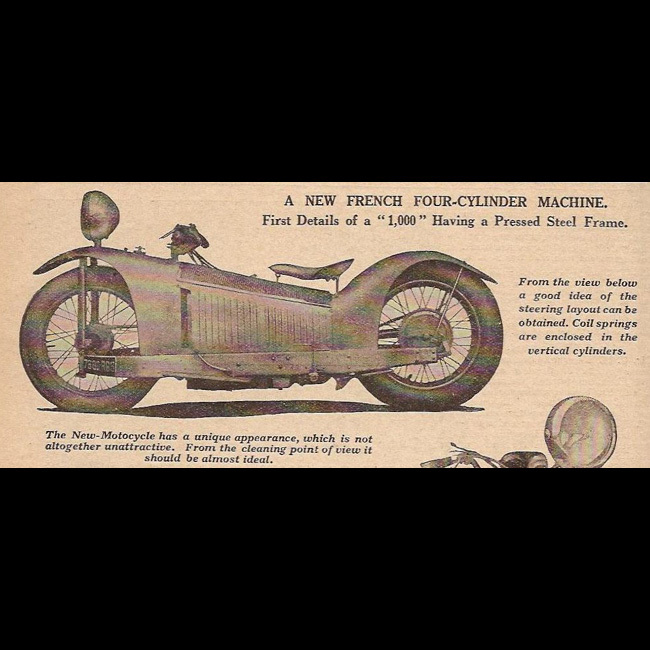
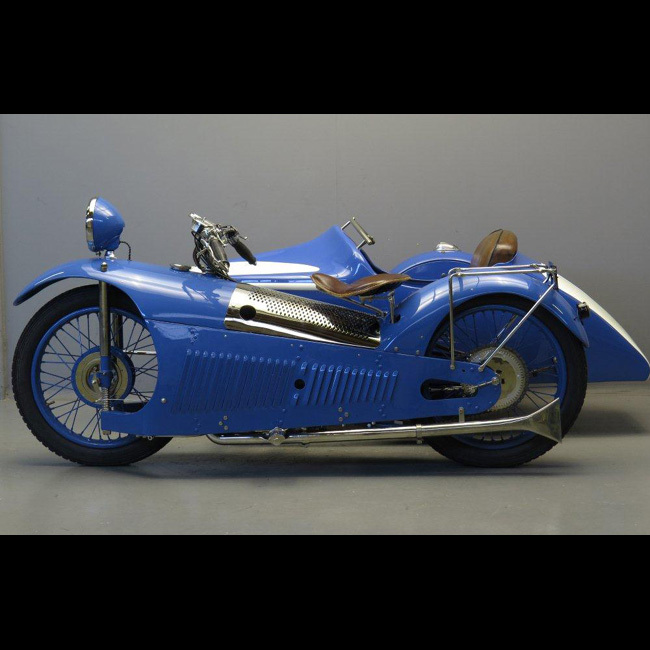
    In the early 1920s, Georges Roy began experimenting with building motorcycles. He wanted to build bikes without a conventional tube frame to achieve better performance at higher speeds and to give them an Art Deco look.

    In 1926, his “New Motorcycle” was completed and patented, but it was not successful. This was due to poor service and sales. That did not stop Roy, as he went back to the drawing board.


     In 1929, he introduced the Art Deco Majestic motorcycle. The bike had some unique features: hub-centered steering, no rear suspension, a steel-mounted rigid rear hub, enclosed mechanicals, and more. Many of these features were used to give the Majestic motorcycles an Art Deco look.
      
    In 1930, Roy sold the rights to the Majestic to a company named Delachanal, which eventually went bankrupt. So, what happened to Roy? He went back to the knitting industry, no joke; that was his profession before working on motorcycle designs.

    Please let us know what you think of this article by posting this blog’s URL on your Facebook page with your comment. Finally, check out our Major Motorcycle Rallies and Motorcycle Events Calendar.

    Go to Our Blog Home Page

  • Early-Era Rover Imperial Manufacturing Video

    Early-Era Rover Imperial Manufacturing Video

    First, in 1878, John Starley began to build bicycles in Britain under the name Rover Company. Then, in 1896, Starley started the Rover Imperial brand.

    And, just like many bicycle manufacturers, the Rover Company began building motorcycles. Next, in 1902, the company’s first motorcycles were built under the Rover Imperial brand. Then, from 1903 to 1924, the company built around 10,000 motorcycles.

    Unfortunately, in 1901, Starley died, and Harry Lawson took over the business. Next, the 1902 motorcycles featured a 3.5 hp engine and many innovative parts. In 1910, John Greenwood was hired to build a 500cc bike that was shown for the first time at the Olympia show.

    Then, in 1913, the TT (Tourist Trophy) for motorcycle racing was launched. During WWI, the company began building and selling engines to the Russian Army. After the War Rover started making cars. Unfortunately, due to the lack of sales, the Rover Imperial Company went under in 1924.

    Below is a cool video on how Rover Imperial motorcycles were made – everything from engines to the completion of the motorcycles.


    Please share this article on your site or social media page, and let us know what you think (you can tag our Facebook page). You might also like our other motorcycle blog articles.

    ** Finally, check out our Major Motorcycle Rallies and Motorcycle Events Calendar.

    Go to Main Blog Page

  • Jefferson Motorcycle Company

    Jefferson Motorcycle Company

    Article by Revolution Motorcycle Marketing

    Perry E. Mack, an engineer, worked for Harley-Davidson in 1905. In 1910, he worked for the Steco Cyclecar Co. That same year, Mack was hired by Waverly Manufacturing. In 1911, he created a 500cc single-cylinder overhead-valve engine capable of up to 5 horsepower. This engine was named P.E.M., which utilized Mack’s initials.

    For a short period, up to 1911, he produced these motorcycles with Frank Kenzler under the name Kenzler-Waverly. In 1912, Mack left the company and joined A.O. Smith. He assisted in the design of the engines used in the Smith Motor Wheel. The company then moved to Jefferson, Wisconsin.


     In 1913, Mack introduced “The New Jefferson” engine. The name reflected the city where the engines and motorcycles were manufactured. Then, in 1915, the name switched to just “Jefferson.”

    Many of the Jefferson motors were used in racing machines because of their powerful overhead-valve design. The engine could produce 9 horsepower. The motors were made until 1919, when the company was dissolved. Even though the engines found success in races, by 1919, the competitive nature of the industry forced the company out of business.

    Please let us know what you think of this article by pasting this blog post’s URL on your Facebook page with your comment. Finally, check out our Major Motorcycle Rallies and Motorcycle Events Calendar.

    Go to Our Blog Home Page